
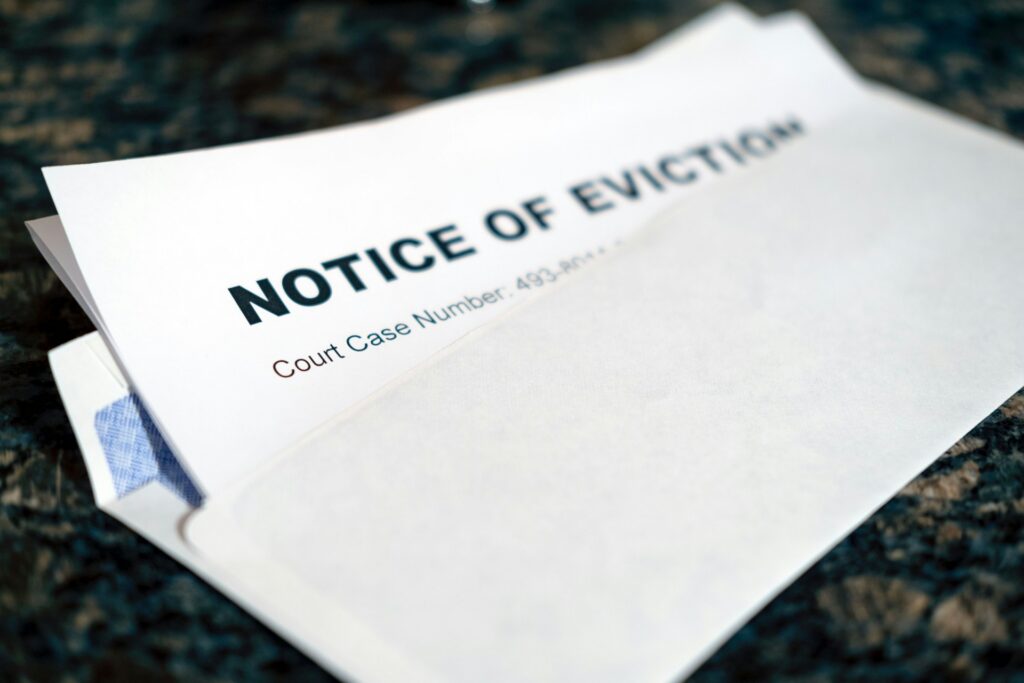
You own rental property in Los Angeles. A tenant stops paying rent, violates the lease, or simply refuses to leave. You know something has to be done. But where do you start, and what does “eviction” actually mean in a city known for some of the strictest landlord-tenant laws in the country?
This guide breaks it down clearly. By the end, you’ll understand what evictions are, how the legal process works in California, what makes Los Angeles different from the rest of the state, and exactly when you need an eviction attorney in your corner.
What Is an Eviction?
An eviction is the court-supervised legal process a landlord uses to remove a tenant from a rental property. In California, this is formally called an Unlawful Detainer (UD) action. It is the only lawful method to remove a tenant who refuses to vacate.
This distinction matters: eviction is a legal process, not a self-help remedy. California law prohibits landlords from locking out tenants, removing their belongings, or shutting off utilities to force them out. Doing so exposes you to civil liability and can result in the tenant suing you. The only path forward is through the courts — and every step must be executed correctly.
Legal Grounds for Tenant Eviction in Los Angeles
Before you can remove a tenant, you need a legally valid reason. California law and Los Angeles city ordinances define two categories of grounds for tenant eviction:
At-Fault Evictions
These apply when the tenant has done something wrong. Common at-fault grounds include:
- Nonpayment of rent
- Violation of a lease term (unauthorized pets, subletting, smoking, etc.)
- Causing damage to the property
- Criminal activity on the premises
- Creating a nuisance
- Refusing access for legally required inspections
No-Fault Evictions
These apply when the tenant has not violated anything, but the landlord has a legitimate legal reason to reclaim the property, such as an owner move-in (OMI) eviction or removing the unit from the rental market under the Ellis Act. No-fault evictions in Los Angeles typically require the landlord to pay relocation assistance to the displaced tenant. Getting those calculations wrong can delay or derail the entire case, which is one reason engaging an eviction attorney before you serve any notice is critical.
How to Evict a Tenant in California: The Step-by-Step Process
Understanding how to evict a tenant in California means understanding that the process is sequential and unforgiving. There are no shortcuts. Miss a step, and you may have to start from the beginning.
Step 1: Serve the Correct Written Notice
Every eviction begins with a legally compliant written notice. The notice type depends on the reason for eviction:
- 3-Day Notice to Pay or Quit: For nonpayment of rent. The tenant has three days to pay in full or vacate.
- 3-Day Notice to Cure or Quit: For curable lease violations. The tenant has three days to fix the problem or leave.
- 3-Day Unconditional Notice to Quit: For serious violations where no opportunity to cure is required.
- 30-Day or 60-Day Notice: For no-fault evictions, with the length depending on how long the tenant has occupied the unit.
Notice requirements in Los Angeles are technical and exacting. A single incorrect word, the wrong notice period, or an improper service method can invalidate the entire proceeding. This is the stage where most landlords make their most costly mistakes — and it’s the stage where an eviction attorney provides the most immediate value.
Step 2: File the Unlawful Detainer Complaint
If the tenant does not comply (by paying, fixing the violation, or vacating), you file an Unlawful Detainer complaint with the Los Angeles Superior Court. Under California Code of Civil Procedure § 1161, strict filing procedures govern what the complaint must include, how it must be served on the tenant, and what documentation must accompany it. An eviction attorney handles all of this with precision, so nothing creates grounds for dismissal.
Step 3: The Tenant Responds
Once served with the UD complaint, the tenant has five court days to file a written response. If they respond, the case proceeds to trial. If they don’t, the landlord can request a default judgment. Either outcome requires careful handling; an eviction attorney ensures you’re prepared for both.
Step 4: Court Hearing
If the tenant contests the eviction, a judge hears the case. Los Angeles tenants and their attorneys are often well-prepared with defenses: habitability claims, improper notice arguments, retaliatory eviction accusations, and procedural objections. A skilled eviction attorney anticipates these tactics, prepares documentation, and argues your case effectively.
Step 5: Writ of Possession and Sheriff Lockout
If the court rules in your favor, you request a Writ of Possession. The writ goes to the Los Angeles County Sheriff’s Department, which delivers a final notice to the tenant (typically five days) before executing the lockout. Only the Sheriff can physically remove a tenant. Landlords who attempt to do it themselves face serious legal consequences.
The California Courts self-help resource on landlord evictions provides a general overview of the UD process statewide, but Los Angeles-specific rules add significant complexity to every stage.
What Makes Los Angeles Eviction Laws Different
Los Angeles is among the most tenant-protective jurisdictions in the United States. Two local ordinances shape nearly every eviction case in the city.
The Rent Stabilization Ordinance (RSO) applies to most residential rental properties built before October 1, 1978. It restricts rent increases, mandates just cause for eviction, and requires relocation assistance for no-fault removals. The Los Angeles Housing Department (LAHD) administers the RSO and maintains a registry of covered properties.
The Just Cause for Eviction Ordinance (JCO) extends similar just-cause protections to newer properties not covered by the RSO. Under the JCO, landlords cannot terminate a tenancy without a legally recognized reason, regardless of whether the lease has expired.
These ordinances add layers of procedural complexity that don’t exist elsewhere in California. For a complete breakdown of how they affect your property, visit our Los Angeles eviction laws overview. Knowing which ordinance applies to your unit and what it requires is the foundation of any successful eviction strategy.
The Most Expensive Mistakes Landlords Make Without an Eviction Attorney
Many landlords try to handle evictions on their own. Most regret it. Here are the errors that cost the most:
Serving the wrong notice. Using a Pay or Quit when a Cure or Quit is required, or issuing a 30-day notice when 60 days are legally mandated, voids the proceeding outright.
Improper service. California has specific rules for how notices must be delivered. A posting on the door when personal service was required is grounds for dismissal.
Ignoring RSO and JCO requirements. Landlords who skip relocation assistance obligations or fail to register their property correctly expose themselves to tenant counterclaims, financial penalties, and case delays.
Walking into court unprepared. Without organized records — payment history, lease violations, written communications, inspection reports — landlords are at a serious disadvantage before a judge.
An experienced eviction attorney doesn’t just file paperwork. A qualified eviction attorney builds the case from the first notice through the final lockout, closing off the procedural loopholes tenants use to delay or defeat evictions.
When Should You Call an Eviction Attorney?
Before you do anything else. The earlier an eviction attorney reviews your situation, the less likely you are to commit a procedural error that resets the clock. If you’ve already served a notice or taken steps on your own, it’s still worth getting professional review — mistakes caught early can sometimes be corrected. Mistakes caught at trial almost never can.
If a tenant isn’t paying, won’t leave, is violating the lease, or is creating problems for other residents or your property, don’t wait it out. Every week a problem tenant stays in your unit is money out of your pocket and leverage accumulating in theirs.
How EvictBoss Handles Evictions for Los Angeles Landlords
EvictBoss works exclusively for landlords. No tenant cases. No conflicts of interest. Just aggressive, landlord-side eviction strategy executed from start to finish: notices, filings, court appearances, and Sheriff coordination.
Our eviction services cover residential and commercial properties across L.A. County, including RSO-protected units, no-fault evictions, nonpayment cases, lease violations, and owner move-in situations. Every case is handled by Ariel Mossazadeh, Esq., a UCLA and Whittier Law graduate with a specialized concentration in real estate transactions and a practice dedicated entirely to landlord advocacy.
When your tenant won’t listen, call the Boss.
The information in this blog is for general informational purposes only and does not constitute legal advice. Every eviction case is unique. Contact EvictBoss to discuss the specific facts of your situation.