
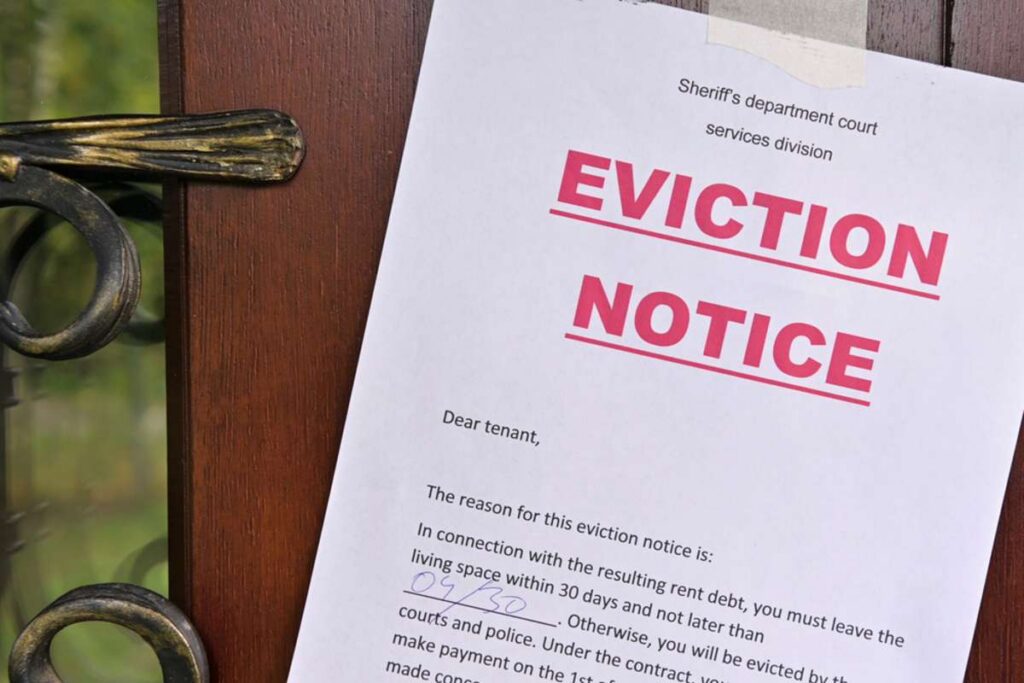
The owner wants the unit back. Maybe the rent stopped. Maybe the tenant keeps breaking the rules. Maybe the owner just wants to move in.
Either way, the next move is yours. You have to serve a notice. And before you print anything, you need to answer one question: how much notice does a landlord have to give in Los Angeles? Get the number wrong and the notice is dead. The tenant stays, the case gets dismissed, and the owner starts over weeks or months later.
This guide covers every common notice period under California law, where Los Angeles adds its own requirements, and the procedural mistakes that kill evictions before they reach a judge.
Why the Notice Period Is the Whole Case
Every eviction in California starts with a written notice. The Unlawful Detainer lawsuit that follows is built on top of it. If the notice is defective, nothing built on it stands.
Judges do not fix bad notices. They dismiss the case. A tenant who knows landlord tenant law, or who has a lawyer, will look at the notice first.
So when an owner asks you how much notice does a landlord have to give, the real answer is: it depends on why you are ending the tenancy, how long the tenant has lived there, and what local ordinance covers the unit.
How Much Notice Does a Landlord Have to Give Under California Law?
State law sets the baseline. Here is how much notice does a landlord have to give for the most common situations.
| Reason for the Notice | Notice Required | Source |
|---|---|---|
| Unpaid rent | 3-Day Notice to Pay or Quit | Code of Civil Procedure 1161 |
| Curable lease violation | 3-Day Notice to Perform Covenant or Quit | Code of Civil Procedure 1161 |
| Incurable violation (nuisance, illegal activity, waste) | 3-Day Notice to Quit | Code of Civil Procedure 1161 |
| Month-to-month tenant, less than one year in the unit | 30-Day Notice | Civil Code 1946.1 |
| Month-to-month tenant, one year or more in the unit | 60-Day Notice | Civil Code 1946.1 |
| Government-subsidized tenancy (such as Section 8) | 90-Day Notice | Civil Code 1954.535 |
| Ellis Act withdrawal from the rental market | 120 days, or one year for qualifying senior or disabled tenants | Government Code 7060.4 |
The 3-Day Notices
For unpaid rent or a lease violation, the answer to how much notice does a landlord have to give is three days. But three days does not mean three calendar days. Under Code of Civil Procedure Section 1161, Saturdays, Sundays, and judicial holidays do not count. Serve on a Thursday and the deadline lands on the following Tuesday at the earliest.
The amount demanded on a 3-Day Notice to Pay or Quit must be rent only. Late fees, utilities, and damages do not belong on it. Overstate the amount and the notice can be thrown out.
The 30 Day Notice to Vacate and the 60-Day Notice
For month-to-month tenancies, California Civil Code Section 1946.1 ties the notice period to how long the tenant has lived in the unit. Under one year, a 30 day notice to vacate is the minimum. One year or more, you need a 60-Day Notice.
Here, how much notice does a landlord have to give comes down to one date: move-in. Count from move-in, not from the date the current lease was signed. A tenant who renewed last month but moved in three years ago gets 60 days.
Just Cause Under AB 1482
The Tenant Protection Act adds another layer. Once a tenant has occupied the unit for 12 months, most California landlords need a “just cause” reason to terminate, and that reason must be stated in the notice. No-fault terminations also require relocation assistance.
This is where the question of how much notice does a landlord have to give stops being about days and starts being about content.
The Los Angeles Complication
Everything above is the state floor. Los Angeles builds on top of it, and this is where property managers lose cases. In the city, how much notice does a landlord have to give is only half the question. What the notice says, and what you do after serving it, matters just as much.
The RSO covers just cause from day one. In the City of Los Angeles, units built on or before October 1, 1978, are generally covered by the Rent Stabilization Ordinance (RSO). Just cause applies from the first day of the tenancy. There is no 12-month grace period.
The JCO covers most other units fast. The Just Cause Ordinance (JCO) protects tenants in non-RSO units once they have lived there six months or their first lease has expired, whichever comes first, according to the Los Angeles Housing Department (LAHD). That cuts the state’s 12-month runway in half.
Every termination notice gets filed with LAHD. For RSO and JCO units, you must file a copy of the notice with LAHD within three business days of serving the tenant. Skip it and the tenant gets an affirmative defense in the Unlawful Detainer case. See the LAHD eviction notice filing page for the portal and cover sheet.
The Right to Counsel notice must be attached. Since August 20, 2025, City of Los Angeles landlords must attach a Notice of Right to Counsel to any eviction notice they serve. A correct notice of eviction without it is an incomplete notice.
Small rent debts are not evictable. In the City of Los Angeles, a tenant cannot be evicted for nonpayment unless they owe more than one month of Fair Market Rent for the unit’s bedroom size. In unincorporated LA County, the Board of Supervisors raised that threshold to two months of Fair Market Rent in 2026.
No-fault means more paperwork and more money. Owner move-ins, Ellis Act withdrawals, and other no-fault terminations require a Declaration of Intent to Evict filed with LAHD and city-set relocation assistance, which often runs well above the state amount.
So how much notice does a landlord have to give in the City of Los Angeles? The same number of days state law requires, plus a valid reason, the LAHD filing, and the required attachments. Before you serve anything, check the Los Angeles eviction laws that apply to that specific unit. The rules change building by building.
How to Serve a Notice That Holds Up
Knowing how much notice does a landlord have to give is step one. Delivering it correctly is the rest.
- Confirm the move-in date. Pull the original application, the first rent payment, and the lease history. The move-in date decides whether you need 30 or 60 days and whether just cause applies.
- Identify the controlling law. RSO, JCO, AB 1482, LA County ordinance, or truly exempt. Each one changes what the notice must say.
- Match the reason to the notice. Unpaid rent gets a 3-Day Notice to Pay or Quit. A curable violation gets a chance to cure. A no-fault termination needs the right period and relocation.
- Draft with precision. State the exact rent owed, the exact violation, or the exact just cause reason. Include every attachment the City requires.
- Serve it the right way. Personal service, substituted service, or post-and-mail, done exactly as the Code of Civil Procedure requires. The method affects when the clock starts.
- File with LAHD within three business days. Keep the confirmation.
- Be careful with rent. Accepting rent for a period after the notice expires can waive the notice entirely.
- File the Unlawful Detainer when the notice expires. Not a day before. Tenants then have 10 court days to respond after service of the summons.
Notice Mistakes That Kill the Case
These are the errors that send property managers back to square one. Most of them start with guessing how much notice does a landlord have to give instead of confirming it.
- Counting weekends on a 3-Day Notice. Court holidays and weekends are excluded. One miscounted day makes the notice defective.
- Serving a 30-day notice on a long-term tenant. If they have been there a year or more, you needed 60 days.
- Leaving out the just cause reason. Most Los Angeles tenants are covered by the RSO or the JCO. A no-reason notice fails.
- Padding the rent demand. Late fees and utility charges on a 3-Day Notice to Pay or Quit can void it.
- Skipping the LAHD filing. It takes minutes. Missing it hands the tenant a defense.
- Forgetting the Right to Counsel attachment. In the City of Los Angeles, it is required with every eviction notice.
- Filing the lawsuit too early. If the deadline has not fully passed, the case is premature.
- Any form of self-help. Changing locks, shutting off utilities, or removing belongings is illegal in California. It exposes the owner to penalties and damages the eviction case.
Landlord tenant rights in Los Angeles are built around procedure. Tenant attorneys know it. One error in the chain can kill the case.
What a Property Manager Can and Cannot Do
As the owner’s agent, you can track rent, gather records, prepare and serve notices, and handle the LAHD filing. That is the stage where the notice period matters most, and it is the stage that is fully in your hands.
The courtroom is different. The Unlawful Detainer is typically filed in the owner’s name, and a property manager who is not an attorney cannot represent the owner in court. If you are not certain how much notice does a landlord have to give for a specific unit, get it reviewed before it goes out. A notice served on the wrong timeline cannot be fixed after the fact.
Where Evict Boss Comes In
Evict Boss works for landlords. Period. The firm drafts notices, handles LAHD compliance, and files Unlawful Detainer cases across Los Angeles County.
Ariel Mossazadeh, Esq., came up through real estate transactions and contract drafting. He knows how tenancies are built, which is why Evict Boss builds notices designed to hold up in court from the first day, not after a dismissal.
Property managers bring the firm the same question every week: how much notice does a landlord have to give for this unit? The answer starts with the facts, and the eviction services Evict Boss offers cover every step after that.
Get the Notice Right the First Time
If the owner is still asking how much notice does a landlord have to give, the clock is already running. Every week spent on a defective notice is another week of lost rent and lost leverage. Get the period, the reason, and the filing right before the clock starts.
When tenants won’t listen, call the Boss. Book a free consultation at 310-943-0073 or info@evictboss.com.
The information in this blog is for general informational purposes only and does not constitute legal advice. Every case is different, and results depend on the specific facts and circumstances. For advice about your property, contact Evict Boss for a consultation.